






Untitled Document

Please register before attempting to upload photos. You must use your actual first and last name and a valid email address when you register. Internet handles and nicknames are not allowed. You will receive an email account verification shortly after you register. Please follow the enclosed instructions in order to activate your rodbuilding.org photo account.

Please limit your photo uploads to those directly associated with custom rod building. Occasional photos of fish caught on your custom rods are acceptable, however, and should be placed in the “miscellaneous” category.

SunMon TueWed ThuFri Sat
  12345
6789101112
13141516171819
20212223242526
2728293031  

100_2145.JPG

Elite Rod Sleeves
David Dosser

[ Equipment and Tools ]
Workshop_5.jpg

My New Workshop
Scott Bazinet

[ Equipment and Tools ]
Tape_splitting.jpg

Splitting wide tape on lathe
John Repaci

[ Equipment and Tools ]
chuck4.jpg

Dryer And Stand
Nick Doben

[ Equipment and Tools ]
Birch_Gasket_rings_rs_07.jpg

Birch_Gasket_rings_rs_07
STEVEN COX

[ Equipment and Tools ]
TriangelChuck_Sned_Front.jpg

Triangle Chuck. Rod dryer chuck, the solution.
Paer Domeij

[ Equipment and Tools ]
· more ·

 
« more
reelseat_building_005.jpg
reelseat_building_008.jpg
reelseat_building_004.jpg
sping_clip_retainer.jpg
spring_clip.jpg
3eightsAnd5sixteenths.jpg
cane_rod_building_class_019.jpg
reelseat_building_007.jpg
reelseat_building_001.jpg
TipTool4.jpg
MotorMountAndChuck.JPG
shelves2.jpg
wrapper2.jpg
TipTopPlumbBob.JPG
mylathe.jpg
P1010440.JPG
Accessory_Wheel_3.JPG
threadcarr.jpg
lights1.jpg
lights2.jpg
P1010445.JPG
· more »

« Previous image · Next image »

Rod turning on the cheap

Click on image to view larger image

« Previous image  · Slide Show · Next image »

Joseph Barthelt


Registered: February 2007
Posts: 6
users gallery
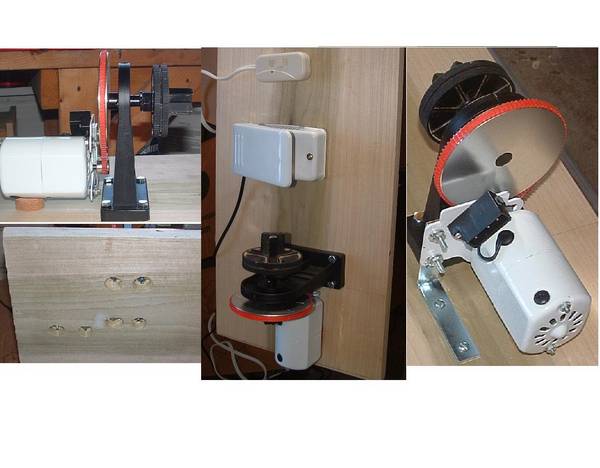
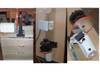
I've never been crazy about my Flexcoat Drill lathe, and power wrappers for my purpose were just too expensive. My solution involves a 20 dollar sewing machine motor(with the ugly red belt), the Pac Bay mount and 3-jaw chuck, and a dimmer switch from the local hardware store.
· Date: Sun June 15, 2008 · Views: 4,575 · Filesize: 31.1kb, 98.7kb · Dimensions: 1065 x 830 ·
Keywords: Rod turning on cheap


Mike Barkley

Registered: March 2005
Location: Southgate, Michigan
Posts: 1,121
Sun June 15, 2008 8:40pm

That's a Great Idea!!!! What are you using for the rod supports? Are they on a moving track??
Joseph Barthelt

Registered: February 2007
Posts: 6
Sun June 15, 2008 9:34pm

I'll have a picture of the supports up with this in a couple days. I'm going to write a quick post about my start to finish process once i have everything assembled and make the moving track system. Newbies should know their options before they invest a $300+
Mike Barkley

Registered: March 2005
Location: Southgate, Michigan
Posts: 1,121
Sun June 15, 2008 9:58pm

Thanks! Looking forward to it!!
Derek McMaster

Registered: April 2005
Location: Rohnert Park, California
Posts: 65
Sun June 15, 2008 10:04pm

Gee..............I just happen to have a Singer Sewing Machine Motor laying around.......


You have my attention..................
roger wilson

Registered: April 2007
Posts: 89
Sat June 21, 2008 2:20am

Joe,
Great Idea.
My first power wrappers used just such a setup.
First I used the larger pulley as a speed reducer as you have done on this project. The next step was to add an additional step down jack shaft to further reduce speed, and provide more precise control.


The next version went to a Dayton AC gear motor. You can obtain various gear ratios with this option. It essentially uses the same ac sewing machine type motor, connected to a right angle drive for gear reduction. The only downside to this setup was the noise. The right angle gears were somewhat noisy.


The next generation (current) is to go to a 24 volt DC gear motor. The big advantage of DC, is the ability to easily reverse direction at the flip of the switch. DC motors will work equally well in either direction; depending on the polarity of the applied voltage.


The last DC motors use 1:1 pulleys to drive the chuck.


Lots of excellent ideas out there.
Take care
Roger


Photo Sharing Gallery by PhotoPost
Copyright © 2007 All Enthusiast, Inc.